Custom Healthcare Software Development for Your Practice
Software built around your clinical workflows, not the other way round: EHR integrations, secure portals and tools your team owns.

Software built for
HIPAA-Aligned Architecture
Access controls, audit logging and encryption included from the start.
EHR and FHIR Integration
Epic, Cerner and Athenahealth connections using FHIR, HL7 and SMART.
API-First Integrations
Billing, scheduling and device connections built on documented, tested interfaces.
Access on Any Device
Clinicians and patients on desktop, tablet or phone, one system.
Custom Software, Built Around Your Organization
Off-the-shelf tools force your team to change how it works. We build the opposite: software shaped around your workflows, your EHR and your compliance needs, from one team. Portals, telehealth, automation and integrations are planned as one system, not separate projects, and you work directly with the people building it, from discovery through launch and support.
- Built for one organization, around your clinical workflows and systems.
- EHR, portal, telehealth and billing connections from the same team.
- You own the software built for you, on the terms in your agreement.
- Direct access to the people designing and building your system.

Off-the-shelf software was not built for you
Generic software covers the average clinic, and your clinic is not average. It bends your workflows, leaves systems disconnected, and charges per user as you grow. Custom software starts from how your team actually works.
Less clinician fatigue
Software shaped around real workflows cuts the copying, retyping and workarounds that wear clinicians down.
True interoperability
Your EHR, scheduling, billing and devices exchange data, instead of each holding a separate partial record.
Lower compliance risk
Encryption, access controls and audit trails are built in, not added after a problem appears.
Room to scale
New locations, providers and services join the same system without rebuilding it from scratch again.
If any of that sounds familiar, the problem is rarely your team. It is software that was never shaped to fit them.
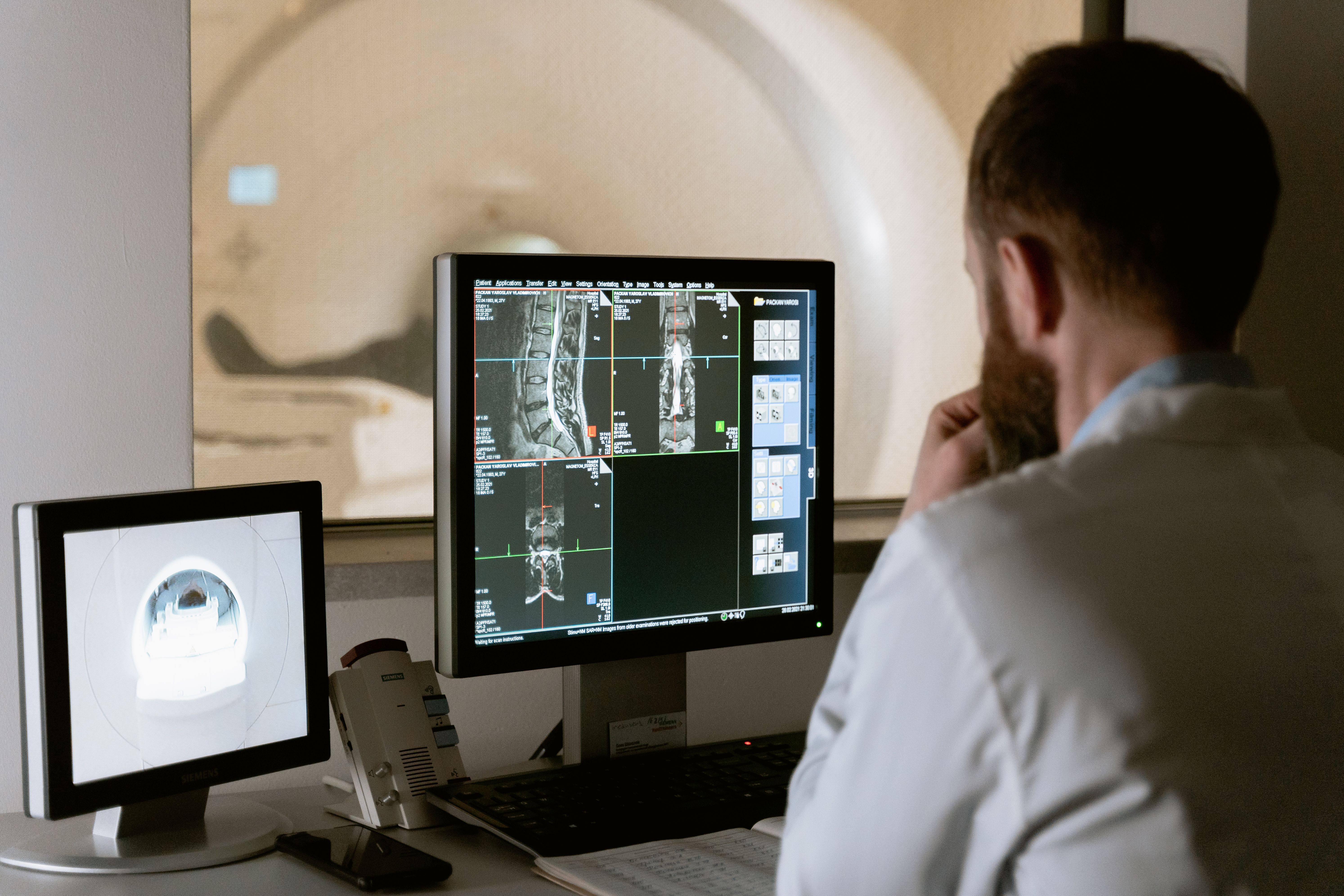
Connect Your EHR, Instead of Working Around It
Many clinics run a capable EHR beside tools that cannot talk to it, so staff copy vitals, notes and prescriptions by hand. We build FHIR, HL7 and SMART on FHIR connections, so data flows both ways between your EHR and the software around it.
- Bi-directional sync of vitals, charts and visit records
- Epic, Cerner, Athenahealth, Allscripts and eClinicalWorks connections
- Mirth Connect mapping for legacy HL7 systems
- SMART on FHIR apps that launch inside your EHR
- Self-service intake with automated insurance verification
Keeping your current EHR? Replacing a working EHR is rarely the answer. We keep the system your clinicians know and connect the tools around it, so the record stays in one place and manual copying stops for good.

When Old Software Slows the Whole Clinic
Legacy systems often hold the data you need behind slow screens, manual exports and workarounds only one person understands. Modernization does not have to mean a risky big-bang replacement. We assess the database, map the workflows and move data in planned stages, without long downtime.
- Legacy database and workflow assessment before any migration
- Code modernization and staged migration to secure cloud hosting
- Data moved without loss and with minimal disruption to clinics
- Cloud hosting on AWS or Azure, with backup and disaster recovery
- Patient portals, secure access to appointments, forms, messages and results. Patient portal development
- Telehealth platforms, video visits, intake and visit records connected to your EHR. Telemedicine solutions
- Healthcare SaaS development, when the software you need is a product for many organizations, not one. Healthcare SaaS development
A Simple and Transparent Process
A clear process, with written deliverables at every step. Discovery, design, build, integration and testing, then support, with working software for you to review at each stage.
 01
Discovery
We map your workflows, systems and compliance needs, and agree scope, integrations and success measures in writing first.
 02
Design
Accessible interfaces in your brand, reviewed with clinicians and patients on desktop and mobile before build starts.
 03
Build
Bi-weekly sprints deliver working software you can test, with progress reviewed against the agreed scope each cycle.
 04
Integration and Testing
FHIR, HL7 and DICOM connections are tested end to end, with security checks before anything goes live.
 05
Support
Deployment, backups and disaster recovery are planned in advance, with maintenance, patches and updates after launch.

Security Designed In, Not Added Later
Custom software holds patient data, so security cannot be an afterthought. We design encryption, access controls and audit logging into the architecture, host on HIPAA-eligible cloud servers, and sign a Business Associate Agreement before any development work begins.
- AES-256 encryption at rest and TLS 1.3 in transit
- Granular role-based access and multi-factor authentication
- Unalterable, audit-ready system logs
- Automatic backup and disaster recovery on secure cloud servers
Compliance is a design input here, not a checklist at the end. The safeguards your auditors ask about are in the system from the first sprint.
What Custom Software Has to Get Right
Custom software earns its keep when it fits the way your organization already works. Hospital management, clinic management, patient engagement, workflow automation, telehealth and analytics are not separate products here. They are parts of one system, built around your workflows, your EHR and your compliance needs, from the first design review.
The same team also builds the systems around it, so nothing is handed off between vendors. Patient portals give patients access to appointments, forms and results, telehealth covers remote visits and follow-up, and our HIPAA compliance consulting reviews the forms and workflows the software depends on.
The standard we build to
- HIPAA and HITECH architecture, with encryption in transit and at rest
- Secure patient data management with granular role-based access
- Multi-factor authentication and unalterable audit logging and trails
- Cloud-native scalability on AWS, Azure or Google Cloud
- API-first integrations with EHR, billing and scheduling systems
- Custom analytics and reporting for clinical and operational leaders

One System for a Multi-State Medical Group
A multi-state outpatient network with more than 150 practitioners ran telemedicine on a tool that could not talk to its legacy EHR, so staff copied vitals, notes and prescriptions by hand. The replacement was built around that EHR, not instead of it.
- Next.js patient dashboard with self-service intake forms
- Python (FastAPI) backend with Celery task handling
- Mirth Connect mapping HL7, plus SMART on FHIR sync
- PostgreSQL with AES-256 field-level encryption for PHI
- AWS hosting with HIPAA configurations
The stack matters less than the fit: one record, one workflow, and no manual copying between systems that should already agree with each other.
Security & Privacy
Security, privacy and HIPAA: explained plainly
Custom software is not “HIPAA-compliant” because it has an SSL certificate, and no honest developer should sell you a badge. HIPAA obligations depend on what information a system collects, stores or transmits, and on your organization's role.
Here is how we approach it in practice:
- A custom system that never handles protected health information is designed so that patients are never asked for health information in a general contact form. The form says so, in plain language, and any request that does involve health information is routed to a separate, safeguarded workflow.
- Any part of a project that will handle protected health information, a portal, intake form or telehealth workflow, is scoped separately: encryption in transit and at rest, access controls, audit logging, appropriate hosting, and Business Associate Agreements put in place with the vendors involved where the work requires them.
- Tracking tools need care in healthcare software. The US Department of Health and Human Services has published guidance on how HIPAA applies to online tracking technologies. We review analytics and advertising tags against that guidance with you before launch, rather than installing them by default.
For more detail, read how we approach HIPAA across our work.
Software for the way your organization works
We build custom software for hospitals, clinics, groups and startups across US healthcare.
Hospitals and Health Systems
Private Clinics and Practices
Medical Groups
Dental Clinics and DSO Groups
Healthcare Startups
Specialty Healthcare Providers
Digital Health Companies
We also build for independent doctors and physicians, telehealth and virtual care providers, hospitals and specialty centers, and healthcare startups that need a first system which can grow into a product platform. Mobile apps and billing software stay as related services, linked from this page rather than repeated here.
Custom build or off-the-shelf? An honest comparison
| Question | Off-the-shelf software | Custom build with Med Clinic X |
|---|---|---|
| Cost at the start | Lower, per user license | Scoped and quoted in writing |
| Fit to your workflows | You adapt to the software | Built around your workflows |
| EHR and system connections | Limited to available integrations | Built around your actual systems |
| Compliance and security control | Set by the vendor | Designed in and agreed with you |
| Ownership | Licensed, never owned | Yours on the agreed terms |
| Best for | A standard need with a short deadline | Organizations where software must fit the operation |
If off-the-shelf software is genuinely the right answer for your stage, we will tell you.
What affects the price of custom healthcare software?
We quote per project after discovery, because the honest drivers of cost are knowable only after we see your situation.
Two ways to work with us: a fixed-scope project with defined deliverables and a defined price, or a phased build that launches the essentials first and adds integrations in a second phase.
Get a Written Quote for Your SoftwareWhat moves a quote
- Scope and complexity of the software
- EHR, billing and device integrations required
- Web, mobile or hybrid platform choice
- Compliance and security requirements
- The level of ongoing support you want
See it before you commit: healthcare demos
We would rather show you working software than describe it. Our demo area includes healthcare product experiences you can click through today, from patient portals to telehealth visits. Try booking as a patient, and count the steps it takes.
Explore Healthcare Software Demos
Everything You Need to Know
Quick answers to common questions about custom healthcare software development, integrations and ownership.
Still have a question? Send us your project details and we will reply in writing.
READY TO TRANSFORM YOUR PRACTICE?
Join Hundreds of Healthcare Providers Who Trust MedClinic X
Book a demo today and see how our platform can help you deliver exceptional patient care.