Key Takeaways
- ✓Missed calls are four problems, not one: the morning rush, the lunch hour, after hours, and callers who give up on hold or on a busy tone.
- ✓Voicemail is not cover for new patients or people in pain. It delays the call, creates callback work in the next morning rush, and some patients never wait for it.
- ✓Audit two weeks of calls by hour and outcome before buying anything. The pattern by window tells you whether to fix rotas, add overflow, or cover after hours.
- ✓Hiring helps with all-day pressure, but clustered demand is usually fixed more cheaply with staggered cover, overflow for peak windows, and booking-capable after-hours cover.
- ✓Any phone cover must follow safety and privacy rules: emergency escalation first, no clinical advice, honest identification, and a signed business associate agreement.
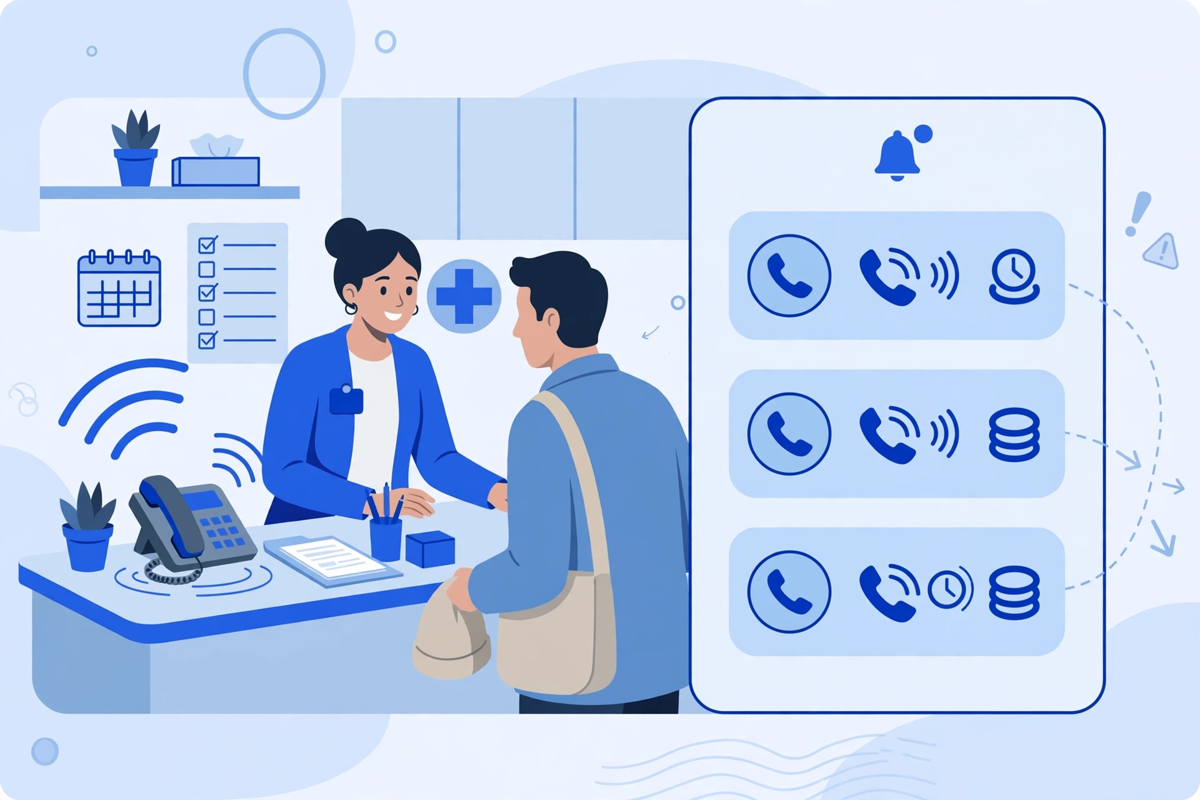
Clinics miss patient calls not because the front desk does not care, but because calls arrive at the exact moments staff cannot answer them: the morning check-in rush, the lunch hour, and after closing, when the patient in front of the desk, the patient on hold, and a ringing phone all need the same person at once. The fix is rarely to hire another receptionist for a few busy hours. The fix is to measure where your calls are actually lost, cover those windows first, and give every unanswered call a clear next step that is not voicemail.
This guide walks through why calls are missed, how to find your own numbers in a two-week audit, and which fixes work in which order, before you change your phone system or your staffing.
Why Clinics Miss Calls in the First Place
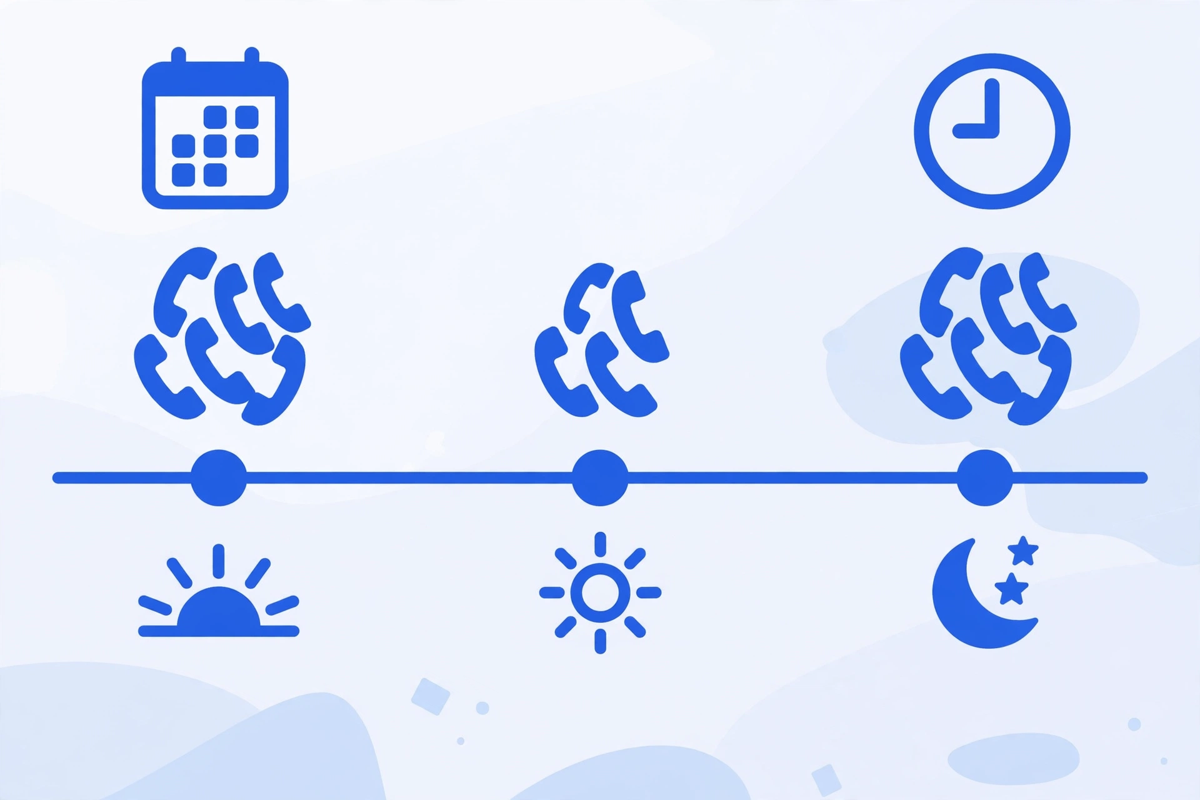
Start with a simple point: a missed call is not one problem. It is at least four different problems, and each one needs a different fix. Treating them as one problem is why many practices buy more cover and still miss calls.
| Where calls are lost | What is really happening | First fix to try |
|---|---|---|
| Morning rush | Check-in, insurance checks, and phones all peak together in the first hour. One person cannot greet, verify, and answer at the same time. | Protect the first hour: stagger check-in tasks, add overflow cover for that window only, and move non-urgent callbacks out of it. |
| Lunch hour | Half the desk is away, callers are on their own lunch break trying to book, and the remaining staff are covering the waiting room. | Stagger lunches so the phone is never uncovered, and publish the lunch cover rule so staff follow it on busy days too. |
| After hours | The clinic is closed, but patients remember to call in the evening, search at night, or feel symptoms on a weekend. | Add after-hours answering that can book or take a complete message, with an urgent route to your on-call process. |
| On hold or busy | A caller waits, hears no update, and hangs up. A second caller gets a busy tone while the first call runs long. | Shorten routine calls with clear booking rules, add a callback option, and review hold times in your phone report. |
The Patient in Front of You Versus the Patient on the Phone
Front-desk work has a built-in conflict. The patient standing at the desk can see if you pick up the phone instead of helping them. The patient calling cannot see the queue in front of you. So the visible patient wins, the phone rings out, and nobody made a bad choice. The job was designed that way.
Good practices name this conflict instead of blaming staff. They agree in advance what happens when both happen at once: a short greeting and a brief hold with permission, a second person who steps to the phone during check-in surges, or overflow cover after a set number of rings. The rule should be written, shared, and the same on a busy Monday as on a quiet Thursday.
- Write the clash down: check-in, check-out, insurance questions, and phones are four jobs, not one.
- Set a ring rule: after how many rings does a call go to a second person, a callback list, or overflow cover?
- Set a hold rule: how long is too long, and who checks back with a caller who is waiting?
- Protect clinical interruptions: which calls must reach a clinician at once, and which must never interrupt a consultation?
Why Voicemail Does Not Save the Call
Voicemail feels like a safety net. For many callers, it is a dead end. A new patient who found you in search results has no loyalty to wait for. An existing patient in pain will call again, but may also call another practice. A busy parent who finally found five minutes to book a check-up may not find five minutes again tomorrow.
Voicemail also creates hidden work. Someone has to listen, write down a number that may be hard to hear, call back, miss the patient, and start phone tag. That callback work lands in the same morning rush that caused the missed call in the first place, so yesterday's voicemails compete with today's ringing phones.
A fair test for your voicemail box
For one week, log every voicemail: time left, new or existing patient if you can tell, reason in general terms, time you called back, and whether you reached the person. If callbacks often fail or land hours later, voicemail is not covering the call. It is delaying it, and some patients will not wait for the delay.
How to Measure Your Own Missed Calls in Two Weeks
Do not buy a fix before you know your pattern. Ask your phone provider or system for a two-week report, or keep a simple log if no report exists. You are looking for patterns by time and outcome, not a single headline number.

- Total calls by hour: where do your peaks actually fall, not where you assume they fall?
- Unanswered and abandoned calls by hour: calls that rang out, went to voicemail, or ended while on hold.
- After-hours calls: how many arrived when you were closed, split by weekday evening and weekend if you can.
- Voicemail count and callback outcome: how many messages were left, how quickly you returned them, and how many you reached.
- New patient calls if your system can flag them: these are the calls with the least reason to try again.
- Hold time before abandonment: the point where callers give up tells you where a callback offer should kick in.
Picture an illustrative example. A small practice finds most missed calls are not all day. They are between 8 and 9 in the morning and after 5 in the evening. That pattern points to two narrow fixes, morning overflow and after-hours cover, not a full-time hire. Details here are invented to show the method, not reported results from a real clinic.
Why Adding More Front-Desk Staff Often Does Not Fix It
Hiring can be the right answer when the desk is short all day, every day. It is a poor answer when the problem is two busy hours and a closed evening. A new hire costs the same in a quiet hour as in a busy one, needs training and cover for sickness and holidays, and still cannot answer a call at 8 in the evening from home.
Calls also cluster in time. Two arrive in the same minute, then none for twenty minutes. Staffing for the peak means paying for idle time in the gaps. Staffing for the average means the peak still fails. So ask which windows need cover, what that cover must do, answer only, book, or route, and what it should cost for those hours alone.
| Option | Best for | Watch out for |
|---|---|---|
| Reorganise the desk | All-day pressure, unclear roles, callbacks piling into the morning | Needs a written ring and hold rule, or the old pattern returns on busy days |
| Staggered hours and lunches | Morning and lunch peaks inside opening hours | Cover must be real, not on paper. Check the phone report after you change rotas |
| Answering service | After-hours messages and urgent routing when booking is not needed | Patients still wait for a callback to book. Check message quality and speed |
| AI receptionist | After-hours and overflow calls that need booking into your real schedule | Must follow your booking rules, identify itself honestly, and escalate urgent calls, see the guide to an [AI medical receptionist](/blog/ai-medical-receptionist) |
| Online booking and intake | Routine bookings that do not need a phone call at all | Keep the phone route for patients who cannot or prefer not to book online |
The Fixes That Work, in Order
1. Fix the windows you already staff
Start inside opening hours, because those fixes cost the least. Stagger lunches, protect the first hour, move paperwork and supplier calls out of peak time, and give the desk a short script for answering, placing a caller on a brief hold with permission, and returning to them quickly. Review the phone report two weeks later to check the change actually moved the numbers.
2. Give routine bookings another route
Some calls do not need to be calls. If a patient only wants a standard appointment, a clear online booking route and a tidy intake flow can take that work off the phone. Keep the offer simple: book online if you can, call if you need help, and make sure both routes land in the same schedule so you do not create double bookings.
3. Cover after hours with booking, not just messages
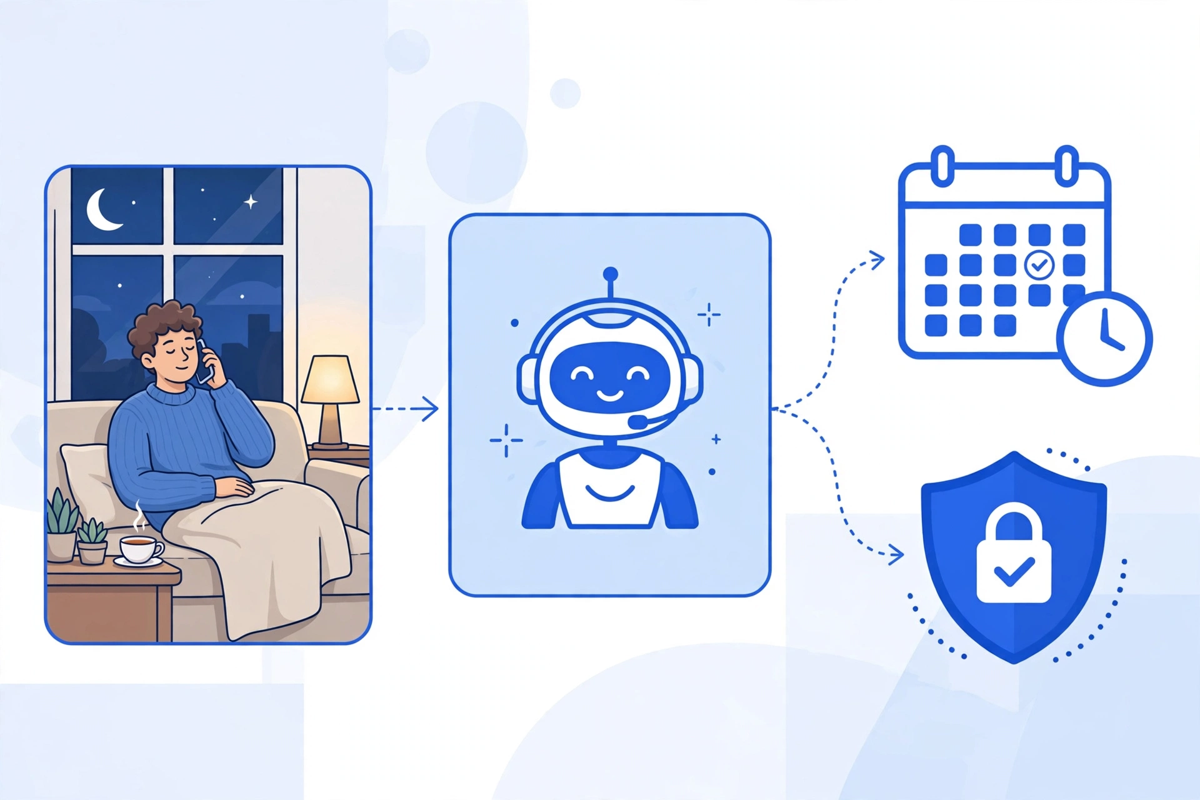
After hours is usually the largest uncovered window. The cover you choose should, at minimum, answer in your practice name, work out whether the call is routine, urgent, or an emergency under your rules, book routine calls into slots you have opened, and leave a complete record for the morning. Our AI medical receptionist service is built for that overflow and after-hours role, and the same tests apply to any provider you consider, including a human answering service.
4. Close the loop every morning
Whatever cover you use, name one person to review the overnight and overflow record first thing: new bookings to confirm, urgent flags to check, and incomplete messages to follow up before the morning rush builds. This morning review is where trust is built. Staff see that the system booked correctly, patients get a prompt follow-up where one was promised, and errors in your booking rules are caught in days, not months.
Safety and Privacy Rules for Any Phone Cover
Any person or system that answers your phones will hear patient names, contact details, and the general reason for a visit. That makes the provider part of your privacy duties. Under HIPAA, a vendor that creates, receives, maintains, or transmits protected health information for you is a business associate, and HHS explains that a business associate agreement is required in that situation. Get that agreement signed before patient calls are handled, not after.
- Emergency rule first: callers describing emergency symptoms are directed to emergency services and your on-call route at once, never booked as routine.
- No clinical advice from phone cover: no diagnosis, no treatment advice, and no judgement about how urgent a symptom is beyond your approved escalation script.
- Honest identification: an automated system should say it is automated and must not pretend to be a named member of staff.
- Limited access and logs: only authorised staff should hear recordings or read transcripts, and access should be logged.
- Complete handover: every covered call leaves a record your team can act on, who called, what they needed in general terms, what was booked or routed, and what still needs a person.
Think also about the wider digital front door the call joins. A patient who books by phone and then faces a confusing portal, a long form, or a reminder that goes to the wrong number has not had a good experience, even if the call itself was answered well. Phone cover, booking, intake, and reminders need to work as one path.
What to Do This Week
- Day 1: Request two weeks of call data from your phone provider, split by hour and outcome.
- Day 2: Log voicemails and callbacks for the week ahead using the simple fields in this article.
- Day 3: Write your ring rule, hold rule, and lunch cover rule with the front-desk team, not for them.
- Day 4: Check your after-hours message. Call your own number in the evening and note exactly what a new patient would hear and do next.
- Day 5: Decide the first window to fix, morning, lunch, or after hours, and trial one change for two weeks, then re-measure.
If your audit shows after-hours and overflow booking is the main gap, you can see the demos to judge how that cover sounds in practice, or request a quote based on your call volume and hours. If your audit shows the problem is inside the day, fix the rota and the rules first. Either way, measure before and after. A fix you cannot measure is a hope, not a plan. Dental practices face the same windows with added booking-length risks. See our guide to an AI receptionist for dental practices for that version of the problem.
Written by Chloe Vance
Healthcare Marketing DirectorChloe Vance has led search engine optimization and digital patient acquisition strategies for top pediatric, dental, and multi-specialty clinical chains.
Frequently Asked Questions
Common conversational queries evaluated by our natural language models concerning deployment guidelines.