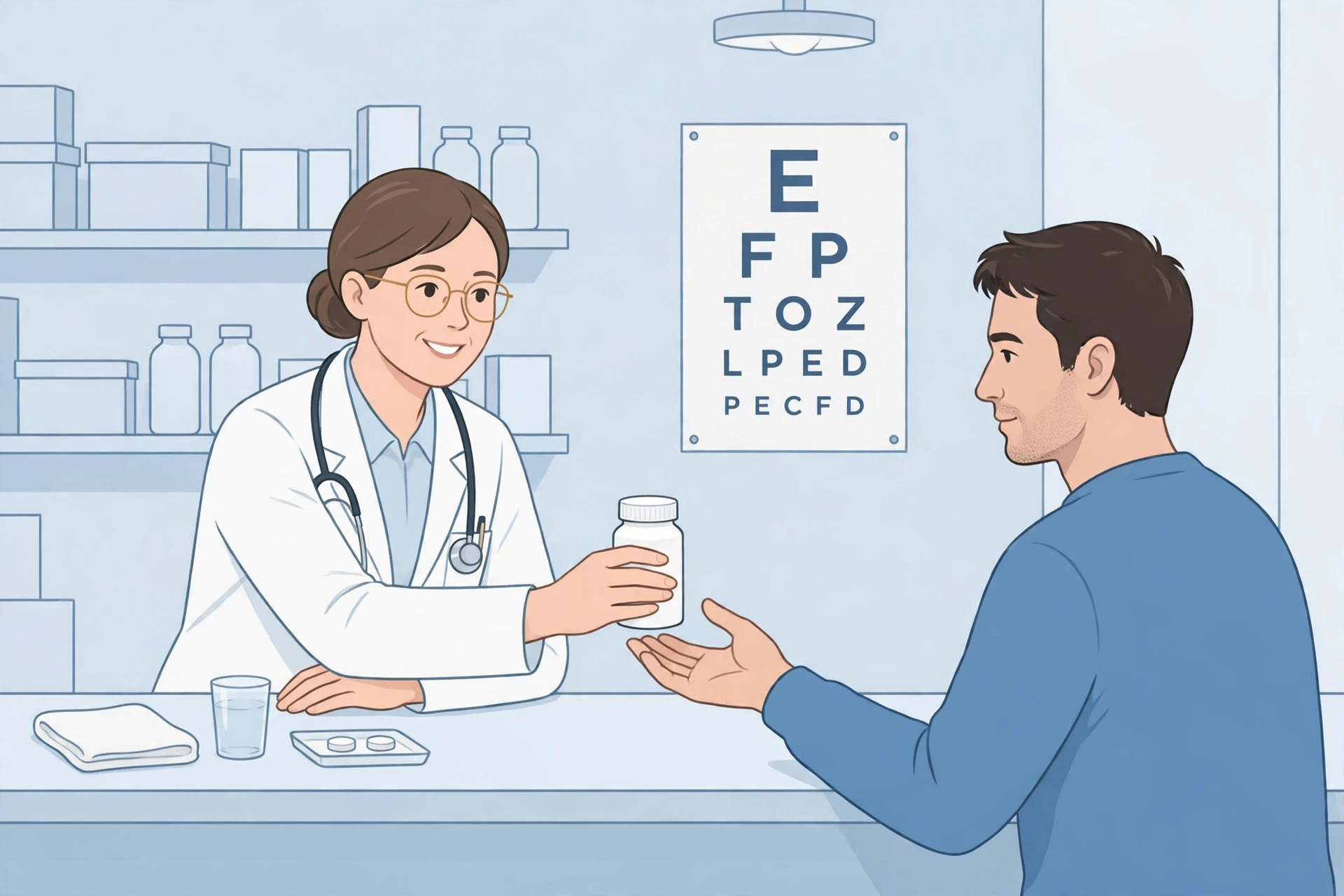
The US Food and Drug Administration (FDA) is requiring the makers of GLP-1 medicines to add a warning about a rare eye condition that can cause sudden, painless vision loss. The agency announced the change on 9 November 2026 in a Drug Safety Communication, and it applies to the whole class of glucagon-like peptide-1 receptor agonist (GLP-1 RA) medicines, including Ozempic, Wegovy, Rybelsus, Mounjaro and Zepbound.
What the FDA Decided
The FDA is requiring application holders for all GLP-1 RA medicines to add information about the potential increased risk of non-arteritic anterior ischemic optic neuropathy (NAION) to the Warnings and Precautions section of the label. NAION is a rare condition that can cause acute, painless, decreased vision in one eye, including permanent vision loss. The agency says NAION cases have been reported for all currently marketed GLP-1 RA products.
The wording matters. The FDA describes the risk as potential, not proven. Its review did not establish that GLP-1 medicines cause NAION, and it did not find a mechanism in animal data that would explain how they could. The action is a labelling change, not a recall, and the FDA has not restricted prescribing or advised patients to stop taking these medicines.
What Prompted the Review
The review began after a study published in July 2024 by Hathaway and colleagues in JAMA Ophthalmology reported a possible link between semaglutide and NAION. The FDA said the study had several limitations, but the signal was strong enough to justify a fuller assessment. The agency then reviewed clinical trial data, animal data, postmarketing reports and published observational studies, including case reports.
Reports of NAION in patients taking GLP-1 medicines reached the FDA through its adverse event monitoring system, but those reports were hard to interpret. The risk factors for NAION often overlap with the conditions common in people prescribed GLP-1 medicines, such as type 2 diabetes and obesity, so the agency turned to other data sources to test whether a relationship exists.
What the Evidence Shows
The FDA pooled data from 126 randomised trials across GLP-1 development programmes, covering 134,253 patients and 288,879 person-years of exposure. It found 15 probable NAION events: 10 in patients taking a GLP-1 medicine, 5 in patients taking a placebo, and none in patients taking another non-GLP-1 glucose-lowering medicine. The overall rate was 6.4 cases per 100,000 person-years with GLP-1 medicines, against 3.8 per 100,000 with a comparator. The numbers are small, and the agency presents them as a signal, not proof of cause.
A separate real-world study in the FDA's Sentinel programme followed adults with type 2 diabetes who started a GLP-1 medicine or another common diabetes medicine between 2019 and 2024. NAION rates ranged from 26 to 32 cases per 100,000 person-years across the groups. There was no statistically significant increase in risk with GLP-1 medicines compared with SGLT-2 inhibitors, with a hazard ratio of 1.19 and a confidence interval of 0.91 to 1.54. Compared with DPP-4 inhibitors, the risk was higher, with a hazard ratio of 1.43 and a confidence interval of 1.02 to 2.01. Published observational studies reviewed by the FDA pointed the same way, consistently reporting an increased risk in people with type 2 diabetes who started a GLP-1 medicine compared with those who started a DPP-4 or SGLT-2 inhibitor.
European regulators moved earlier. Reuters reported that the European Medicines Agency's safety committee said last year that NAION may affect up to 1 in 10,000 people taking semaglutide for at least a year, and USA Today reported that warnings were added to European Ozempic and Wegovy labels in June. Several lawsuits in the US have accused the manufacturers of withholding information about the risk, and both Novo Nordisk and Eli Lilly have denied a significant link, according to USA Today.
Why This Matters for Healthcare Organizations
For clinics that prescribe GLP-1 medicines, the labelling change lands in the consultation room. Patients will see the warning in the medication guide, and many will arrive with questions shaped by news coverage. The facts worth having ready are the small absolute numbers, the word potential, and the difference between a labelling change and a withdrawal. The FDA has not told patients to stop treatment, so the conversation is about awareness and what to watch for, not about ending a medicine that is working.
The practical step is simple. Patients should be told to contact their clinician promptly if they notice sudden, painless vision loss in one eye, blurred or missing areas of vision, distorted colours, or hazy central vision, and clinicians should send patients with those symptoms to an eye specialist. Practices may also want to check that their prescribing and counselling notes reflect the new warning, and that front-desk staff know to treat a report of sudden vision loss as urgent.
Analysis: A Warning, Not a Withdrawal
The FDA's decision follows a familiar pattern for a safety signal that is real enough to disclose but not proven enough to act on more strongly. The agency gathered several kinds of evidence, found a consistent but small signal, and chose the middle step: put it in the label and let patients and prescribers weigh it. The mixed real-world results support that caution. Against one comparator the increase was not statistically significant, and against another it was, which is exactly the kind of pattern that justifies a warning without justifying a restriction.
For practices, the risk is less clinical than communicative. A rare eye warning on a widely used medicine is the kind of news that travels fast and loses its qualifiers on the way. The practices that handle it well will be the ones that give patients the numbers, the word potential, and a clear instruction on what to do if symptoms appear, rather than leaving the label to speak for itself.
Clinics reviewing how patient communication and follow-up work can be handled can explore MedClinicX's AI patient portal, see how after-hours calls are handled on our AI medical receptionist page, or explore the demos and request a quote. For related coverage, see our earlier article on the FDA investigating a tumour risk linked to Zolgensma gene therapy and Eli Lilly bringing Zepbound and Foundayo to the Hims & Hers telehealth platform.
Sources and References
- U.S. Food and Drug Administration, FDA Requires Safety Labeling Changes for Glucagon-Like Peptide-1 Receptor Agonists (GLP-1 RAs) Due to Potential Increased Risk of Rare But Serious Eye Condition, Drug Safety Communication, 9 November 2026: https://www.fda.gov/drugs/drug-safety-communications/fda-requires-safety-labeling-changes-glucagon-peptide-1-receptor-agonists-glp-1-ras-due-potential
- Reuters, via SRN News, US FDA orders new eye risk warnings for Ozempic, Zepbound, 9 November 2026: https://srnnews.com/us-fda-requires-safety-labeling-changes-for-glp-1-drugs-over-eye-condition-risk/
- USA Today, Do Ozempic, Zepbound cause vision loss? New FDA warning explained, 9 November 2026: https://www.usatoday.com/story/news/health/2026/11/09/glp-1-vision-loss-new-fda-warning-label/92694486007/
- Hathaway JT et al., Risk of Nonarteritic Anterior Ischemic Optic Neuropathy in Patients Prescribed Semaglutide, JAMA Ophthalmology, 2024;142(8):732-739, as cited by the FDA (doi: 10.1001/jamaophthalmol.2024.2296): https://doi.org/10.1001/jamaophthalmol.2024.2296
Reporting based on the sources above, accessed 10 November 2026. The FDA Drug Safety Communication was read directly, and the Reuters and USA Today reports were read directly and cross-checked against it. MedClinicX did not conduct original reporting or interviews for this article. Corrections: contact us via https://medclinicx.com/contact