

Key Takeaways
- ✓A standard month of RPM pays about $104 per patient in 2026: 99454 device supply at about $52 plus 99457 management at about $52, both national non-facility amounts before locality adjustment.
- ✓Six codes cover the programme: 99453 setup once per episode, 99454 or the new 99445 for device supply, and 99457, 99458 or the new 99470 for management time.
- ✓The thresholds decide the month: 16 days of readings for 99454, or 2 to 15 days under 99445. 20 minutes of management with one live conversation for 99457, or 10 to 19 minutes under 99470.
- ✓The device has to meet the FDA definition of a medical device and transmit readings automatically. Manual entry never qualifies, and most consumer fitness trackers do not either.
- ✓From 2027, RPM needs a separately reportable initiating visit and is limited to established patients, and the 99454 rate falls to about $41. The third-party staffing restriction is delayed to 2029.
Medicare pays about $104 per patient per month for a standard month of remote patient monitoring. That figure is the device supply code, 99454, at about $52, plus the first 20 minutes of treatment management, 99457, at about $52. Both are 2026 national non-facility amounts, and your own payment is adjusted for your locality. The short answer ends there. The longer answer is that both codes have thresholds: 16 days of readings for the device code, and 20 minutes of management time with at least one live conversation for the management code. Miss a threshold and that part of the month pays nothing.
This article covers the six codes Medicare pays for in 2026, what each one requires, what has to be in place before the first claim, what you can bill in the same month, where claims get denied, and what changes in 2027. The rates come from the October 2026 Physician Fee Schedule file, as compiled in HealthArc's guide to CPT code 99454 and Health Recovery Solutions' 2026 reimbursement update, and the rules come from CMS's Telehealth and Remote Patient Monitoring booklet, MLN901705. Our remote patient monitoring guide covers the care side of the programme: choosing devices, getting patients to use them, and running the daily workflow.
What Remote Patient Monitoring Billing Actually Pays For
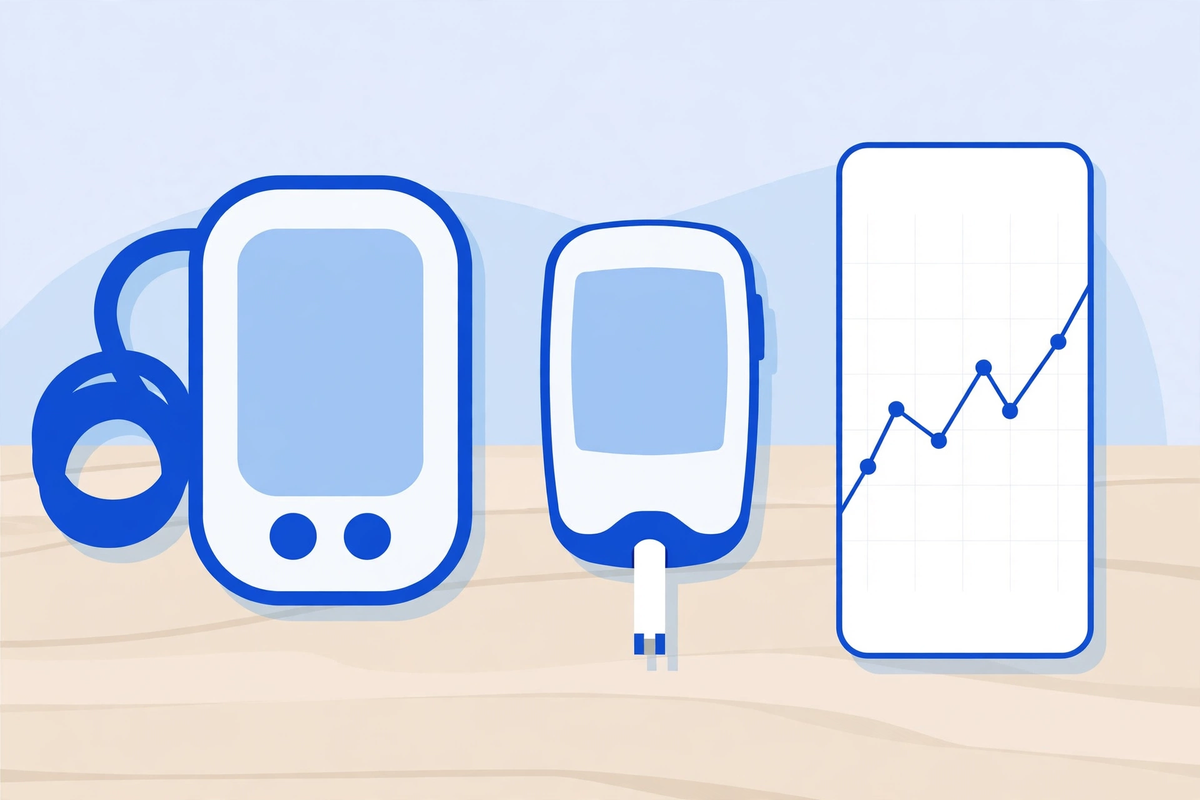
Remote patient monitoring, or RPM, is the collection of physiologic data from a patient at home, using a device that sends the readings to your clinic without the patient typing them in. Blood pressure, blood glucose, weight and oxygen saturation are the usual readings. Medicare has paid separately for RPM since 2018, and it pays for three parts of the service, not one.
The three parts are setup and patient education, device supply with data transmission, and treatment management. Each part has its own code, and each code has its own threshold. A month can pay for all three, or for none of them, depending on how many days of readings came in and how much management time your team logged.
- Setup and education, code 99453. Getting the device into the patient's home, showing them how to use it, and making sure the first readings arrive.
- Device supply and transmission, codes 99454 and 99445. The device itself, plus the daily recordings or programmed alerts it sends you over a 30-day period.
- Treatment management, codes 99457, 99458 and 99470. Your team's time reviewing the readings, contacting the patient, and acting on what the data shows.
The device is the first gate. It has to meet the FDA definition of a medical device, and it has to transmit data automatically. A patient typing readings into an app does not qualify, and neither does a consumer fitness tracker or smartwatch, unless it carries FDA medical device clearance and sends data on its own. The monitoring also has to be medically necessary: the patient has an acute or chronic condition that needs ongoing monitoring, and the readings are likely to help manage it. It has to be ordered by a physician, nurse practitioner or physician assistant, and there has to be an established relationship between the patient and the billing practitioner.
The Six Codes, and What Each One Pays
Six codes cover the whole programme in 2026. Two of them are new this year, and both exist because the old thresholds used to wipe out short months entirely.
| Code | What it covers | Requirement | 2026 national amount |
|---|---|---|---|
| 99453 | Initial setup and patient education | Once per episode of care, with at least 2 days of data | About $22 |
| 99454 | Device supply, daily recordings or programmed alerts | 16 to 30 days of readings in a 30-day period | About $52 |
| 99445 | Device supply, short window (new in 2026) | 2 to 15 days of readings, and it cannot be billed with 99454 | About $52 |
| 99457 | Treatment management, first 20 minutes | Per calendar month, with at least one live interactive communication | About $52 |
| 99458 | Treatment management, each additional 20 minutes | Add-on to 99457 | About $41 |
| 99470 | Treatment management, first 10 to 19 minutes (new in 2026) | Per calendar month, and it cannot be billed with 99457 | About $26 |
The figures are approximate national non-facility amounts from the October 2026 Physician Fee Schedule file. Published compilations put 99454 at about $47 to $52, depending on which relative value file was used, so treat every figure here as a national average, not a quote. Your payment is adjusted for your locality, and the patient owes the usual Part B cost sharing.
A standard month for one patient is 99454 plus 99457, about $104. Add one unit of 99458 when the month runs long and it is about $145. The setup code, 99453, pays about $22 once per episode of care, not once per month, and not once per lifetime. If a patient stops monitoring and enrols again later, a new episode can bill it again.
The 16-Day Rule, and What the Two New Codes Changed
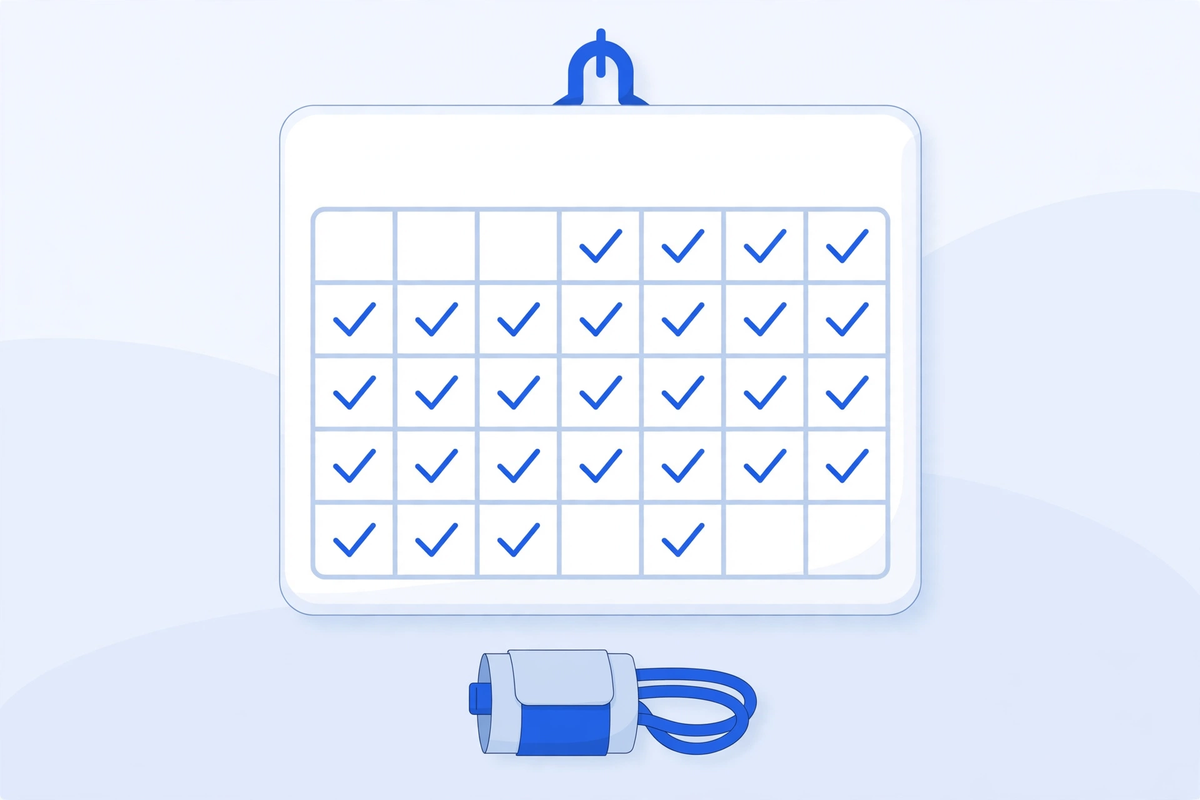
The 16-day rule was the most common reason RPM months went unbilled. For code 99454, the device has to transmit readings on at least 16 days of a 30-day period. A patient who transmitted on 15 days produced a month that paid nothing for the device, however much management time your team spent on it.
From 2026, that cliff is gone. Code 99445 pays for device supply when a patient transmits on 2 to 15 days, at the same rate as 99454. One day of readings still pays nothing, and the two codes cannot be billed together in the same 30-day period, so the billing team picks the one that fits the month.
The same change happened on the management side. Code 99470 pays for 10 to 19 minutes of treatment management in a calendar month, where 99457 needs a full 20 minutes. A month with 15 minutes of management used to pay nothing for management time. Now it pays about $26. The two codes cannot be billed together in the same month, so if the month reaches 20 minutes, bill 99457 and not 99470.
Watch the two clocks. Device codes run on rolling 30-day periods, counted from when monitoring started. Management codes run on calendar months. A patient who starts on 20 November has a device period that runs to 19 December, while the management clock resets on 1 December. Billing teams that treat the two clocks as one are the ones that bill the wrong code for the month.
What Has to Be in Place Before the First Claim
Five things must exist before RPM billing starts. CMS sets them out in its Telehealth and Remote Patient Monitoring booklet (MLN901705, April 2025). The booklet is the document to keep on file, because it is the source an auditor will check first.
- An established patient relationship. The patient has to be an established patient of the billing practitioner. From 2027, a separately reportable initiating visit is also required, as explained in the 2027 section below.
- Documented consent, obtained and recorded when RPM begins. The patient has to be told about cost sharing, and that only one practitioner can bill RPM for them in a 30-day period.
- Medical necessity in the record. The condition being monitored, why readings help manage it, and the treatment plan the readings feed into.
- A qualifying device, ordered for the patient. It meets the FDA definition of a medical device and transmits readings automatically, over a secure connection.
- A signed business associate agreement with the vendor or platform that handles the data. HHS publishes [sample business associate agreement provisions](https://www.hhs.gov/hipaa/for-professionals/covered-entities/sample-business-associate-agreement-provisions/index.html) that show what the agreement has to cover.
Two of these are new-practice traps. The first is consent: a consent conversation that happened but was never written down is the same as no consent in an audit. The second is the vendor agreement: if a third-party platform stores or transmits patient readings, it is a business associate, and the agreement has to be signed before the first reading arrives, not after.
Treatment Management Time: What Counts, and the Live Conversation
Code 99457 pays for the first 20 minutes of treatment management in a calendar month, and it has one condition that catches billing teams out. At least one of those minutes has to be a real-time interactive communication with the patient or caregiver: a live conversation, by phone or video. Audio-only counts. Without that conversation, 99457 cannot be billed at all, even if your team spent an hour reviewing readings.
The management time can be clinical staff time, working under the billing practitioner's general supervision, and it has to be logged with dates and minutes. What counts is time spent reviewing readings, contacting the patient about a reading, adjusting the care plan, or coordinating with another clinician about what the readings show. What does not count is the time the device spends transmitting, or time already counted toward another programme in the same month.
The practical shape is a short weekly rhythm. A nurse reviews the week's readings, calls the patients whose numbers moved, and logs the minutes as they happen. Reconstructing a month of management time from memory at month end is how minutes get invented, and invented minutes are the first thing an auditor finds. Our article on chronic care management billing describes the same discipline for the programme RPM most often runs alongside.
What Else You Can Bill in the Same Month as RPM
RPM rarely runs alone. A patient with hypertension and diabetes is often in chronic care management too, and the two programmes can be billed together, as long as no minute is counted twice. The table below is the short version. The rule behind it is simple: one minute, one programme.
| Programme | Same patient, same month as RPM? | The rule |
|---|---|---|
| Chronic care management, 99490 to 99491 families | Yes | Separately billable. RPM management minutes cannot also count toward CCM time, and only one practitioner can bill CCM for the patient in a month. |
| Remote therapeutic monitoring, 98975 to 98986 | No | RPM and RTM cannot be billed together for the same patient in the same period. Pick the programme that matches what is being monitored. |
| Behavioural health integration, 99484 and 99492 to 99494 | Yes | Separately billable, with separate time and documentation. |
| Transitional care management, 99495 to 99496 | Yes | Separately billable when medically necessary. TCM minutes cannot count toward RPM time. |
| 99454 and 99445 | No | Same 30-day period: one or the other, never both. |
| 99457 and 99470 | No | Same calendar month: one or the other, never both. |
There is also a one-practitioner rule. Only one practitioner can bill RPM for a patient in a 30-day period. If a cardiologist and a primary care practice both enrol the same patient, the first clean claim gets paid and the second gets denied. Asking about other RPM programmes at enrolment prevents that, and it is the same question our telehealth reimbursement article recommends asking before any remote programme starts.
Where RPM Claims Get Denied
Most RPM denials are about the record, not the medicine. The findings below are the ones auditors look for, and they are all preventable.
- Fewer than 16 days of readings, billed as 99454 anyway. Check the day count first, and bill 99445 when the month falls short.
- Management time under 20 minutes, billed as 99457, with no 99470 in its place. Or 99457 billed with no live conversation in the month.
- Manual entry. The patient typed readings into an app or a portal, and the device never transmitted them.
- A consumer device that does not meet the FDA definition of a medical device, however accurate its readings are.
- No documented consent, or consent recorded after monitoring had already started.
- Two practitioners billing RPM for the same patient in the same 30-day period, or RPM and RTM billed together.
- Minutes double-counted with CCM, behavioural health integration or transitional care management.
The fix for most of these is a monthly check, not more staff. One person owns the RPM list, checks the days of readings and the management minutes before claims go out, and confirms the live conversation happened. The article on AI in revenue cycle management describes the same discipline applied to the whole billing cycle: a human check at every stage, and the failure mode named before it happens.

What Changes in 2027
The calendar year 2027 Physician Fee Schedule final rule, released 4 November 2026 and effective 1 January 2027, changes RPM in three ways. Our news post on the 2027 fee schedule final rule covers the rule as a whole. The RPM parts are these.
First, RPM and remote therapeutic monitoring can only be billed for established patients, and a separately reportable initiating visit is required when RPM begins. That brings RPM in line with chronic care management, which has required an initiating visit all along. Second, the 99454 national rate falls to about $41.11, from about $52, and the conversion factor falls 2.31 per cent, to $32.63. A standard month of 99454 plus 99457 will pay about $93 in 2027, before locality adjustment, against about $104 in 2026.
Third, the proposed restriction to staff employed by the practice, which would have cut out third-party vendors, was delayed to 1 January 2029. CMS delayed it by two years on 5 November 2026. Vendor-run programmes can continue for now, but the direction is clear: if your RPM programme runs on a vendor's staff, the contract should already plan for the 2029 change.
What to do now: make sure every RPM patient has a documented initiating visit on file before January, check vendor contracts for the 2029 staffing change, and re-run the revenue maths at the lower 99454 rate before promising the programme anything it cannot pay for.
Is RPM Worth Running?
The arithmetic is simple, and it is worth doing before you enrol anyone. Take an illustrative example: 50 enrolled patients, each billed a standard month at about $104, is about $5,200 a month in gross Medicare payment, before locality adjustment and before the patient's Part B cost sharing is collected. Add one unit of 99458 for half the panel and it is about $6,200. That is the revenue side.
The cost side is devices, platform or vendor fees, and staff time. Fifty patients at 20 minutes of management each is over 16 hours of clinical staff time a month, plus the time spent chasing readings from patients who stop transmitting. And the revenue only arrives for the patients who actually transmit. A panel where half the patients send readings on fewer than 16 days a month is a panel that pays for 99445 months instead of 99454 months, and for 99470 months instead of 99457 months.
Whether the trade works depends on adherence, and adherence depends on the condition. Start small, with 20 or 30 patients whose readings change decisions: hypertension, heart failure, diabetes. Enrol more only when the days-of-data numbers hold for three months running. Med Clinic X does not provide RPM services, and it does not submit claims or run billing for clinics. We build clinic software, including remote patient monitoring software that helps a practice keep its readings and billing organised. This article is written so you can judge the programme on your own terms, with the same checks we would apply to any tool that touches patient records.
The Bottom Line
RPM pays about $104 per patient for a standard month in 2026, and the thresholds are the whole game: 16 days of readings, or 2 to 15 under the new 99445. 20 minutes of management with one live conversation, or 10 to 19 under 99470. A device that meets the FDA definition and transmits on its own, consent on file, and one practitioner per patient per 30-day period. The two new 2026 codes removed the cliffs that used to zero out short months. The 2027 rule adds an initiating visit and cuts the device rate, so plan the panel on the new numbers, not the old ones. To talk through the rest of your front desk and billing setup, book a demo or request a quote.

Written by Chloe Vance
Healthcare Marketing DirectorChloe Vance has led search engine optimization and digital patient acquisition strategies for top pediatric, dental, and multi-specialty clinical chains.
Frequently Asked Questions
Common conversational queries evaluated by our natural language models concerning deployment guidelines.