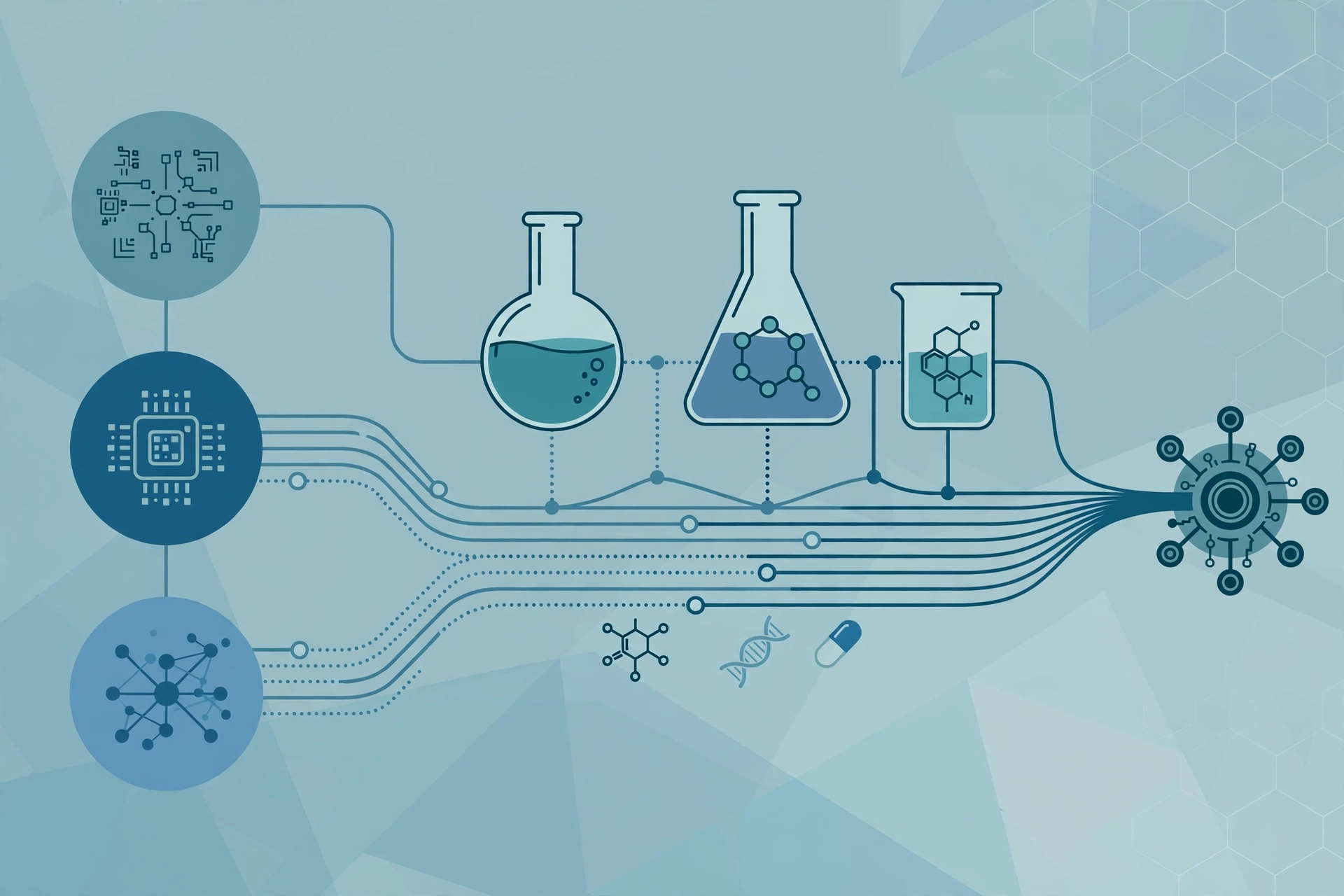
OpenAI is moving its healthcare ambitions from helping scientists answer questions to helping them run the programmes behind new medicines. On 20 October 2026, OpenAI announced that it had acquired Orchestra Bio, a platform that helps biopharmaceutical teams coordinate the complex process of drug development, bringing Orchestra's team and technology together with Rosalind, its AI models and tools for life-sciences research. TechCrunch, reporting the deal the same day, noted that Orchestra, founded four years ago, creates AI agents that help biotech companies manage drug-discovery operations, from tracking finances to resolving scheduling issues with clinical trials. SiliconANGLE, also reporting on 20 October, framed the deal the same way: Orchestra builds AI agents that help pharmaceutical teams keep development programmes on track, and its staff and technology will now sit inside OpenAI's Rosalind life-sciences unit.
What Orchestra Bio Does
Orchestra's product is best described as coordination software, not a drug-discovery model. In OpenAI's announcement, the company describes a platform where people and AI agents work together to advance drug programmes: scientists and programme leaders delegate the monitoring and tracking of studies and campaigns to agents, freeing time to guide the work, make decisions and address issues before they cause delays. The announcement's central example is a failed manufacturing batch that threatens to delay the start of a clinical trial, Orchestra's agents help teams identify which activities and timelines are affected, gather the relevant information and compare ways to respond, after which scientists and programme leaders use that analysis to decide what to do next. That distinction matters: the agents surface consequences and options, they do not approve treatments or make the final call. Orchestra was founded in San Francisco in 2022 by chief executive Ashoka Rajendra, and TechCrunch reports it had raised around $20 million as of 2025 from backers including Andreessen Horowitz, Atria and 8VC.
The Rosalind Fit
Rosalind is the umbrella Orchestra is joining, and its parts explain why OpenAI wanted a coordination layer. GPT-Rosalind helps scientists reason through questions in biology and chemistry, while Rosalind Workbench connects those capabilities with scientific tools and data so researchers can analyse results and plan experiments. GPT-Rosalind launched as a reasoning model in April 2026, and eligible organisations have been able to use it outside research preview since September under a trusted-access programme. Orchestra adds the missing operational half: where Rosalind helps with the science, Orchestra tracks the programme around it, studies, timelines, dependencies and handoffs between internal departments and external partners. OpenAI says developing a new medicine takes roughly 10 to 15 years on average from target discovery to regulatory approval in the United States, and that teams must orchestrate programmes across departments and partners, often relying on disconnected systems. The company also names two existing Rosalind collaborators: its partnership with Novo Nordisk aims to translate scale and scientific expertise into faster research and commercial execution, while at Moderna, AI is helping teams turn insights from complex data into experimental workflows.
What Is Not Changing Yet
For all the ambition in the announcement, three things remain undisclosed, and readers should treat them as open questions rather than settled facts. First, financial terms were not disclosed by either company. Second, OpenAI gave no timeline for when Orchestra's agents will show up in its products, so no customer should assume Rosalind Workbench already contains Orchestra's coordination features. Third, the announcement offers no evidence that Orchestra's tools have shortened development timelines or improved clinical outcomes, the claim is about capability, not measured results. Founder Ashoka Rajendra, writing on X at the announcement, said AI had reached an inflection point where people and agents can take on coordination together, with agents handling planning, orchestration and analysis while scientists and programme leaders focus on decisions requiring their expertise. That is a statement of intent, and the test will be whether biopharma teams adopt the combined tools and whether the systems catch important problems early, provide reliable analysis and save time compared with current processes.
What This Means for Health Systems
For clinics and hospitals, this deal is not about a product they will buy next quarter. It is a signal about where AI vendors are heading, and it is worth reading alongside the week's other AI stories. The direction of travel is from single-task tools toward systems that coordinate work across teams, the same pattern visible in Oracle and AstraZeneca's partnership to use AI and real-world data to match patients to clinical trials (see https://medclinicx.com/news/oracle-astrazeneca-ai-clinical-trials-partnership) and in hospitals' call for developers to own post-market monitoring of AI devices (see https://medclinicx.com/news/aha-fda-generative-ai-medical-devices-oversight). For health systems that run or refer into clinical trials, the practical questions are governance questions: who validates an agent's dependency map, who audits its recommendations, and what happens when its analysis is wrong. For vendors and buyers alike, the deal also raises a competitive question TechCrunch flagged. The largest AI labs are building ever more software for the largest industries, so a specialist tool a clinic or research partner relies on today may be absorbed into a platform tomorrow, with pricing, integration and support terms set by the acquirer.
Analysis: Agents Move From Answering to Coordinating
Analysis (MedClinicX): The interesting shift in this acquisition is not that AI can reason about biology, that was Rosalind's existing pitch, but that OpenAI now wants AI to own the connective tissue of drug development: schedules, dependencies and the knock-on effects of a single failure. That is a harder trust problem than answering a scientific question, because a wrong dependency map does not look wrong until a trial slips. The announcement is careful to keep humans in charge of decisions, and that framing is the right one for healthcare buyers to insist on: agents that draft, track and warn, with people who approve. Until OpenAI publishes integration details, timelines and customer evidence, the honest assessment is that this is a credible direction with unproven delivery, worth watching for trial sponsors and research partners, but not yet a reason for any clinic to change a system it runs today.
Sources and References
- OpenAI, OpenAI acquires Orchestra Bio, 20 October 2026: https://openai.com/index/openai-to-acquire-orchestra-bio/
- TechCrunch, OpenAI acquires startup Orchestra Bio to beef up its biotech business, 20 October 2026: https://techcrunch.com/2026/10/20/openai-acquires-startup-orchestra-bio%E2%81%A0-to-beef-up-its-biotech-business/
- SiliconANGLE, OpenAI acquires Orchestra Bio to bring AI agents into drug development, 20 October 2026: https://siliconangle.com/2026/10/20/openai-acquires-orchestra-bio-to-bring-ai-agents-into-drug-development/
Reporting based on the sources above, accessed 26 October 2026. The OpenAI announcement was read directly in full, and the TechCrunch and SiliconANGLE reports were read directly in full and cross-checked against it. MedClinicX did not conduct original reporting or interviews for this article. Corrections: contact us via https://medclinicx.com/contact