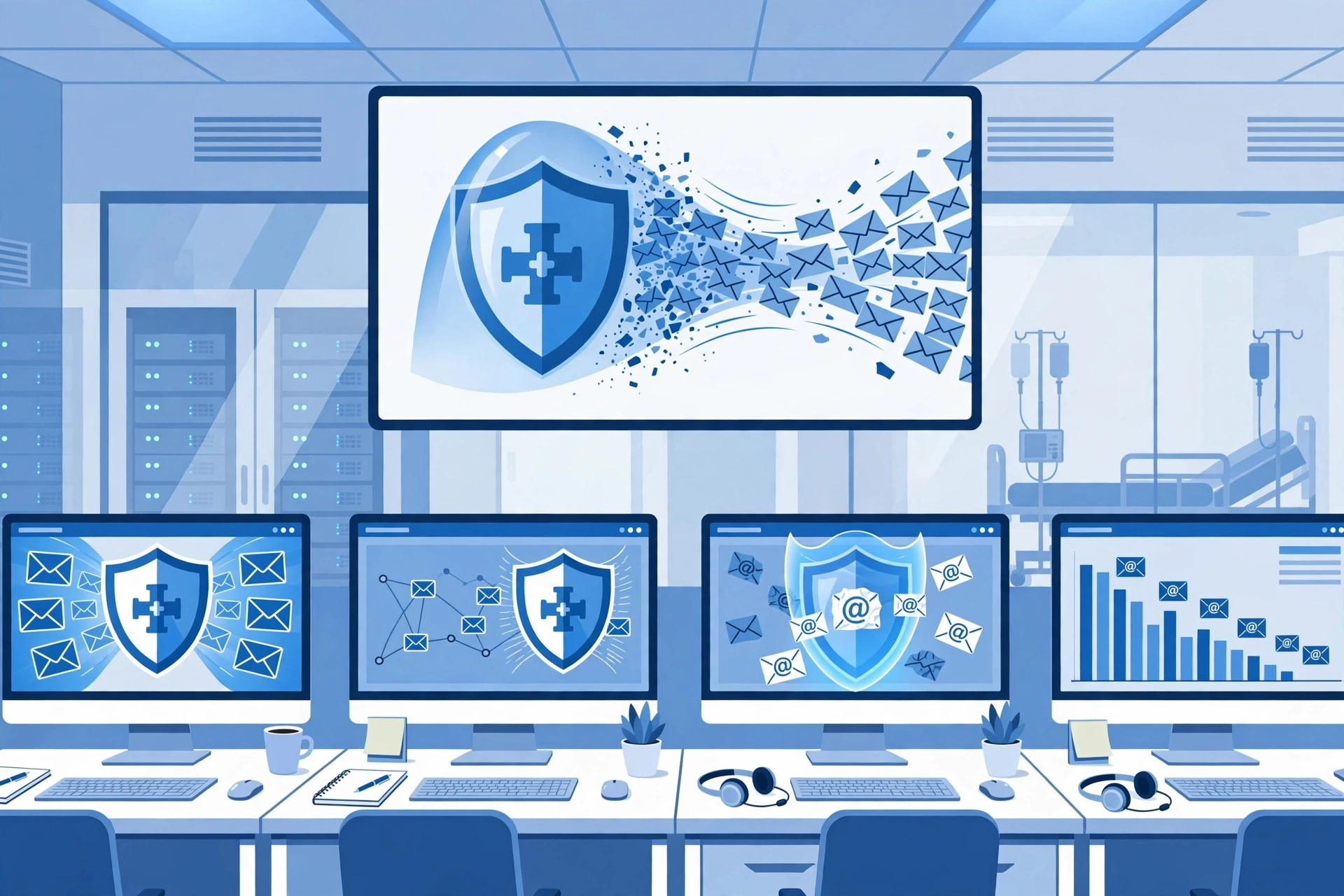
Microsoft and Health-ISAC announced on October 14, 2026 that they are dismantling three components of a Chinese-language cybercrime marketplace whose phishing services targeted organizations worldwide, including healthcare organizations. The three services, YAM Store, CoGUI and Iron Man, collectively enabled more than one billion malicious messages since January 2026, according to Microsoft, targeting over 75,000 organizations in more than 150 countries and generating tens of millions of dollars for their operators.
What Was Disrupted
Each service played a different role in the same supply chain. YAM Store sold fraudulent Microsoft and Google accounts and other ready-made tools used to run scams and steal credentials. CoGUI supplied ready-made phishing websites and messages that impersonated governments, banks and technology companies. Iron Man, which investigators said was increasingly replacing CoGUI by mid-2026, offered more than 2,300 templates that let criminals tailor email, text and web content to specific brands, industries and countries, including templates impersonating healthcare providers. More than 750 million of the messages the services enabled were aimed at Microsoft customers alone. Microsoft also noted that an organization appearing in one of these templates does not mean its own systems were compromised.
The Court Action and the Investigation
On October 7, 2026, a judge in the US District Court for the Southern District of Florida granted Microsoft and Health-ISAC's request to take control of the domain names supporting the three services, and the partners seized and redirected them. Microsoft said it has disabled more than 20,000 accounts connected to YAM Store and continues to remove infrastructure hosted on its services and block more than 100,000 domains used for impersonation and fraud. The investigation began in late 2025, after Japan's National Police Agency alerted Microsoft to malicious campaigns targeting people in Japan. It grew to include the Japan Cybercrime Control Center, Resecurity, Cloudflare, Oracle, Proofpoint and TRM Labs. Health-ISAC, the nonprofit through which health sector organizations share threat information, contributed its picture of how the phishing activity was affecting healthcare organizations, and the partners used AI tools alongside human analysis to connect infrastructure that had appeared unrelated.
What This Means for Practice Security
Phishing remains the most common way attackers first get inside a healthcare organization, and a single set of stolen credentials can lead to diverted payments, exposed patient records or a ransomware incident that shuts down scheduling and care. This case shows why those messages are so hard to filter: the marketplace sold access to accounts and infrastructure designed to look legitimate, and its templates were built to imitate the organizations patients and staff already trust, including healthcare providers. The takedown removes one large supplier, but Microsoft itself described the broader phishing problem as ongoing. Clinics should treat the basics as non-negotiable: multi-factor authentication on email and remote access, staff training that uses realistic examples, a simple route for reporting suspicious messages, and prompt disabling of accounts when someone leaves. Our evergreen guide sets out how to evaluate the software side of that defence: https://medclinicx.com/blog/healthcare-cybersecurity-software-guide
Analysis: A Service Economy, Not Lone Attackers
Analysis (Med Clinic X): The detail that matters most for healthcare leaders is the structure of this operation. Accounts, hosting, templates and storefronts were sold as separate services, so a criminal with little technical skill could assemble a convincing campaign quickly, in the right language and branding for the target. That division of labour is why disruption aimed at suppliers, rather than at individual campaigns, is significant: seizing domains and disabling accounts raises the cost of rebuilding for every customer of the marketplace at once. It does not end the risk. The practical lesson for a practice is that defences tuned only to yesterday's sender addresses will keep missing. Identity checks, authentication and staff verification habits are what hold up when the next marketplace appears. See also our October 15 report on how often attacks like these disrupt patient care: https://medclinicx.com/news/healthcare-cyberattacks-patient-care-2026-report
Sources and References
- Microsoft (Steven Masada, Digital Crimes Unit), republished by Health-ISAC, Disrupting the service economy behind transnational cybercrime operations, October 14, 2026: https://health-isac.org/disrupting-the-service-economy-behind-transnational-cybercrime-operations/
- Cybersecurity Dive, Microsoft, Health-ISAC and partners take down popular phishing kit services, October 14, 2026: https://www.cybersecuritydive.com/news/phishing-marketplace-takedown-microsoft-health-isac/832965/
- Becker's Hospital Review, Microsoft, Health-ISAC disrupt cybercrime operations targeting healthcare, October 14, 2026: https://www.beckershospitalreview.com/healthcare-information-technology/cybersecurity/microsoft-health-isac-disrupt-cybercrime-operations-targeting-healthcare/
Reporting based on the sources above, accessed October 16, 2026. Med Clinic X did not conduct original reporting or interviews for this article. Corrections: contact us via https://medclinicx.com/contact